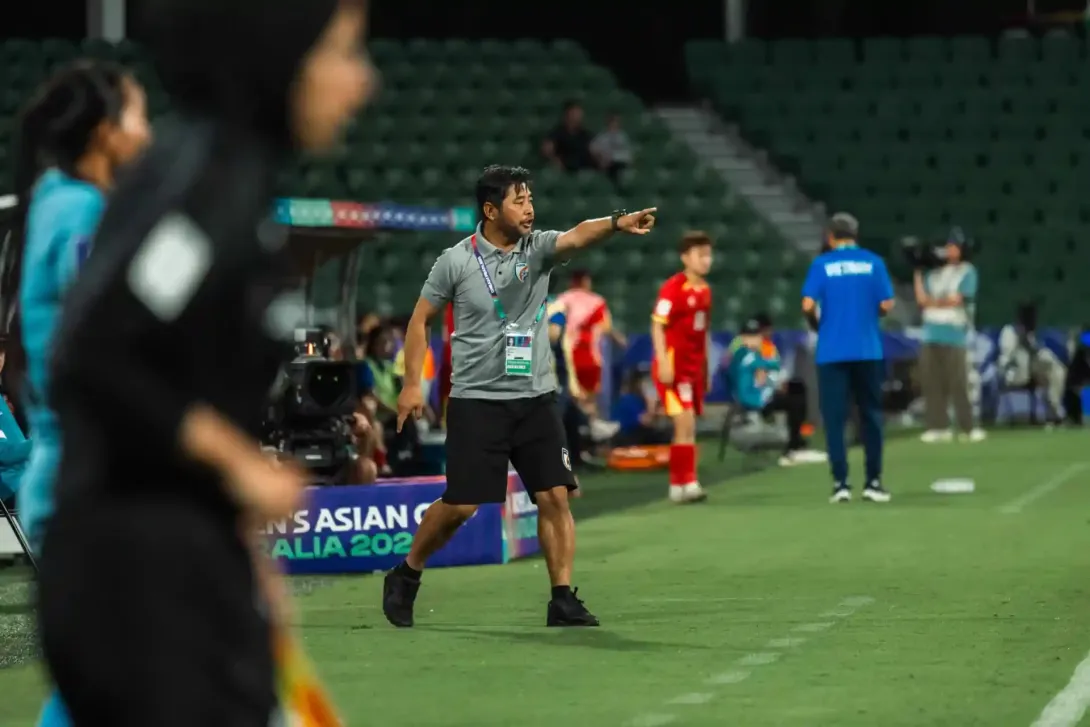
India’s women’s national football team is set to re-enter the international arena at the FIFA Series 2026 in Kenya, signaling a pivotal reset following a disappointing campaign at the AFC Women’s Asian Cup. Opening against the host nation on April 11 at Nyayo National Stadium, the tournament marks the beginning of a renewed developmental cycle. With a focus on tactical recalibration, squad depth, and long-term competitiveness, the Blue Tigresses aim to leverage this platform to rebuild momentum and reassert their presence in the evolving landscape of international women’s football.
A Crucial Return to International Football
Just weeks after a challenging outing at the AFC Women’s Asian Cup, the India women’s national football team finds itself at a defining juncture. The upcoming FIFA Series 2026 offers more than competitive fixtures—it presents an opportunity to recalibrate strategy and restore confidence.
The team’s opening clash against Kenya women’s national football team on April 11 at Nyayo National Stadium in Nairobi is expected to set the tone for the tournament. For Indian football, the match represents both a symbolic and practical restart.
From Setback to Strategy: Learning from the Asian Cup
India’s early exit from the AFC Women’s Asian Cup exposed structural gaps in preparation, squad rotation, and adaptability under pressure. However, such setbacks often serve as catalysts for systemic change.
The federation and coaching staff are now focusing on refining tactical frameworks, strengthening defensive organization, and enhancing match fitness. This transition reflects a broader shift toward data-driven decision-making and long-term athlete development—an approach increasingly adopted across global football ecosystems.
FIFA Series as a Developmental Platform
The FIFA Series 2026 is designed to provide emerging teams with consistent international exposure. For India, participation in such structured competitions is critical to bridging the gap with higher-ranked nations.
Beyond immediate results, the emphasis is on experimentation—integrating युवा talent, testing formations, and building squad cohesion. These objectives align with the strategic roadmap aimed at improving India’s FIFA rankings and enhancing its competitiveness in future continental and global tournaments.
Commercial and Institutional Implications
The resurgence of the India women’s national football team carries implications beyond the pitch. Women’s football in India is gradually attracting corporate sponsorships, media attention, and institutional backing.
A strong performance at the FIFA Series 2026 could accelerate this momentum, unlocking new revenue streams through endorsements, broadcasting rights, and grassroots investments. The sport’s commercial viability is increasingly tied to consistent international participation and visible progress.
The Road Ahead: Building a Sustainable Future
As the Blue Tigresses take the field in Nairobi, the focus extends beyond immediate victories. The tournament marks the onset of a new cycle centered on resilience, adaptability, and strategic growth.
Key priorities include:
- Talent Development: Expanding the pipeline of young players through academies and domestic leagues.
- Tactical Evolution: Adopting flexible systems to compete against diverse playing styles.
- Global Integration: Increasing exposure to international competitions and best practices.
Conclusion
India’s participation in the FIFA Series 2026 represents a critical inflection point for women’s football in the country. While recent setbacks have underscored existing challenges, they have also paved the way for introspection and reform.
The opening fixture against Kenya women’s national football team is more than just a match—it is the first step in a broader journey toward rebuilding credibility and achieving sustained success on the international stage.
Comments