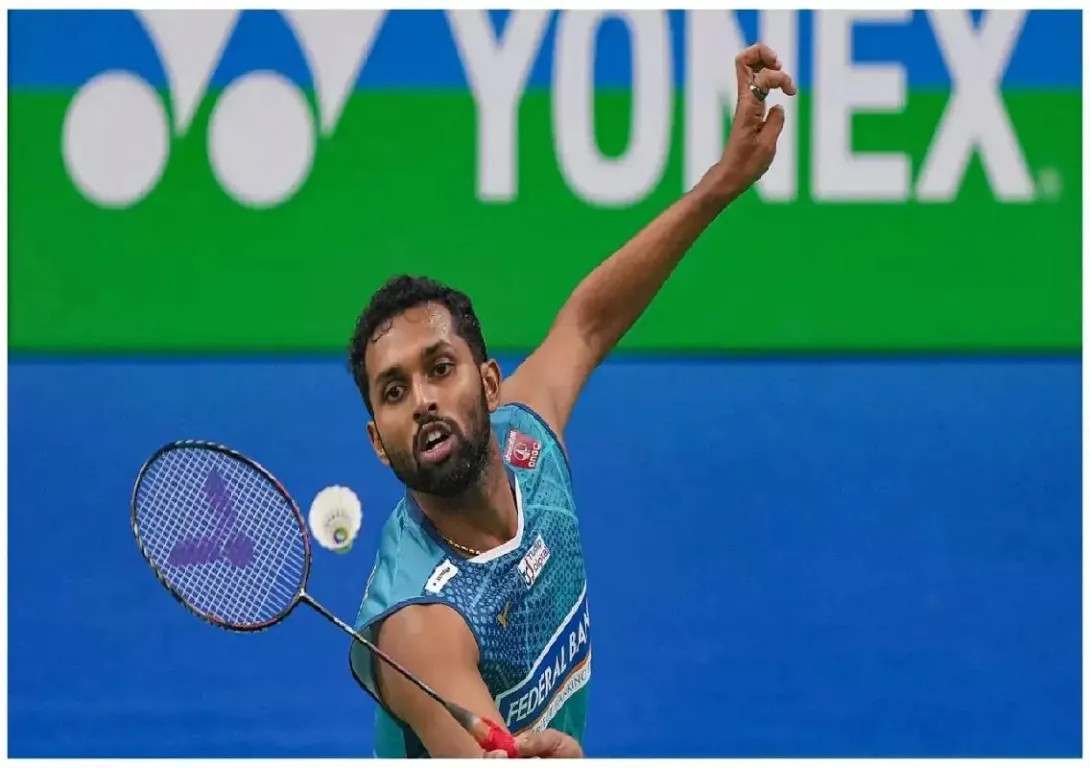
Indian badminton player H. S. Prannoy has reignited discussion around athlete recognition and sporting culture in India after openly questioning the limited public attention given to major badminton achievements unless accompanied by gold medals. His remarks followed India’s bronze-medal finish at the Thomas Cup, one of the sport’s most prestigious international events. The comments gained additional momentum after doubles stars Chirag Shetty and Satwiksairaj Rankireddy expressed disappointment over the muted public response. The episode has once again highlighted broader concerns regarding visibility, commercial valuation, and institutional support for non-cricket sports in India.
Prannoy Questions India’s Recognition Culture in Sport
Indian badminton veteran H.S. Prannoy has sparked a wider conversation about how sporting success is perceived in India, arguing that achievements in badminton often fail to receive meaningful recognition unless athletes secure top podium finishes.
Speaking after India’s bronze-medal performance at the Thomas Cup, Prannoy suggested that even landmark accomplishments in elite international tournaments struggle to attract sustained national attention.
His remarks have resonated strongly within the Indian sporting community, particularly among athletes competing in Olympic disciplines outside cricket, where visibility and public engagement frequently fluctuate based on medal outcomes.
The comments also reflected growing frustration among players who believe that consistent international performances are often undervalued despite the increasing competitiveness of global badminton.
Thomas Cup Bronze Sparks Debate Beyond the Court
India’s bronze-medal finish at the Thomas Cup represented another significant milestone for Indian badminton on the international stage.
The tournament, widely regarded as one of badminton’s most prestigious global team competitions, features many of the world’s strongest badminton nations. Securing a podium finish in such an event is considered a major accomplishment within the sport.
However, the achievement unexpectedly triggered debate after leading doubles pair Chirag Shetty and Satwiksairaj Rankireddy posted emotional messages on social media pointing to the comparatively limited public reaction surrounding the team’s success.
Their comments highlighted a recurring concern among Indian athletes — that achievements in Olympic and international competitions often receive only short-lived attention unless accompanied by historic gold-medal victories.
Prannoy’s observations further amplified that discussion, bringing renewed focus to the broader issue of recognition disparities across Indian sports.
Indian Badminton’s Global Rise Contrasts With Visibility Challenges
Over the past decade, Indian badminton has undergone a dramatic transformation, emerging as one of the country’s most successful Olympic disciplines.
Indian players have consistently secured medals and titles at major international tournaments, including the Olympics, World Championships, Commonwealth Games, and Asian Games. The rise of athletes such as P. V. Sindhu, Saina Nehwal, and the Satwik-Chirag doubles partnership has elevated India’s reputation within global badminton.
Despite these achievements, many within the sport believe badminton still struggles to command the sustained media attention and commercial ecosystem enjoyed by cricket.
Sports marketing analysts often point out that recognition gaps directly influence sponsorship opportunities, endorsement valuations, and long-term athlete visibility.
For athletes competing in physically demanding international circuits throughout the year, public acknowledgment is increasingly viewed not merely as emotional validation but as an important component of professional sustainability.
Broader Questions Around India’s Sporting Priorities
Prannoy’s comments have also reopened larger debates about how India measures sporting success.
In many global sporting nations, podium finishes at elite international events are celebrated regardless of medal color because they reflect consistent high-performance standards. In India, however, public discourse frequently centers almost exclusively on gold medals or headline-making victories.
Experts argue that such an outcome-driven culture can unintentionally undermine appreciation for the depth and competitiveness of international sport.
The Thomas Cup bronze, for example, came against some of the strongest badminton nations in the world and reflected India’s growing ability to compete consistently at the highest level.
Yet the relatively subdued national response has reinforced perceptions among athletes that sustained excellence is often overshadowed by binary success narratives.
Commercial Growth of Non-Cricket Sports Remains Uneven
The issue raised by Prannoy also carries significant commercial implications.
India’s non-cricket sporting ecosystem has expanded considerably over the past decade through increased corporate sponsorship, digital streaming platforms, and league-based competitions. However, commercial growth remains uneven across disciplines.
Badminton has emerged as one of the country’s most marketable Olympic sports, yet industry experts believe its financial potential remains underutilized relative to its international success.
Limited mainstream visibility can directly impact broadcasting value, brand partnerships, grassroots participation, and long-term institutional investment.
Athletes and administrators increasingly argue that broader recognition of achievements — beyond only gold-medal victories — is necessary to build stronger sporting ecosystems capable of sustaining international competitiveness.
A Reflection of India’s Evolving Sporting Identity
H.S. Prannoy’s remarks ultimately reflect a deeper transition taking place within Indian sport.
As Indian athletes become more competitive globally across multiple disciplines, expectations surrounding public engagement, institutional support, and media recognition are also evolving.
The debate sparked after the Thomas Cup bronze is therefore about more than a single tournament result. It highlights the changing aspirations of Indian athletes who now compete not merely to participate internationally but to establish India as a consistent global sporting force.
For badminton players who have spent years elevating India’s standing on the world stage, recognition is increasingly viewed as part of the broader respect owed to sustained excellence.
The conversation initiated by Prannoy may therefore serve as another important step in redefining how sporting achievement is valued in modern India.
Comments