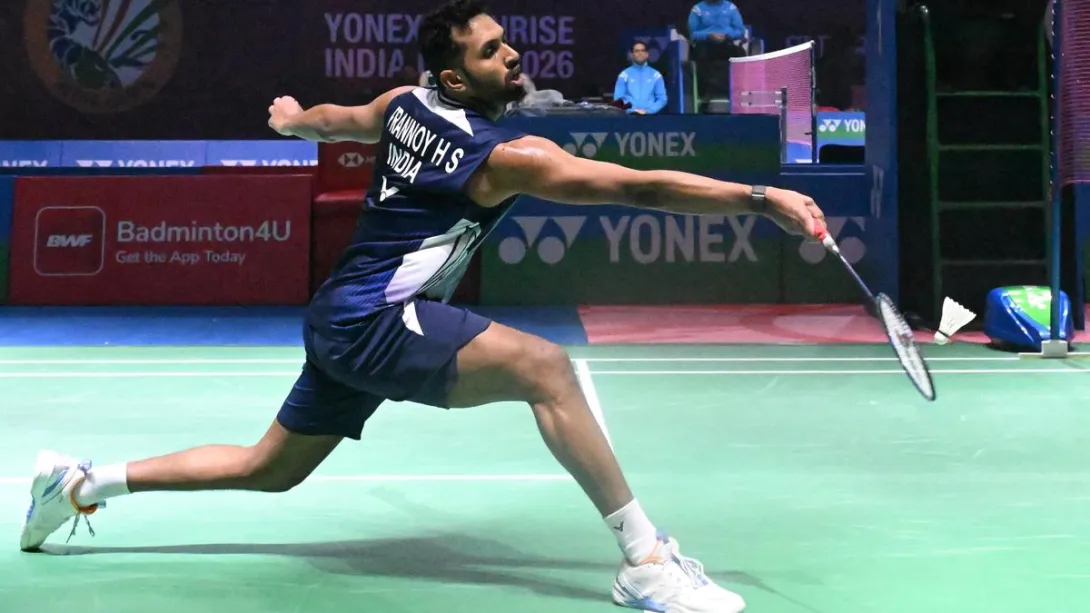
India suffered a narrow 2-3 defeat against China in their final Group A encounter at the Thomas Cup Finals in Horsens, highlighting both resilience and missed opportunities. Comeback victories from Ayush Shetty and HS Prannoy kept India in contention, but China’s overall depth proved decisive. The result underscores the competitive intensity at the elite level of international badminton, where marginal differences determine outcomes. While India demonstrated fighting spirit, the loss exposes areas requiring strategic refinement as they aim to strengthen their position in global team competitions.
A Closely Contested Group Finale
The final Group A tie at the Thomas Cup Finals delivered a compelling contest between two badminton powerhouses. India entered the match seeking momentum, but China’s consistency across matches ultimately secured them a 3-2 victory.
Played in Horsens, the encounter reflected the high standards of international team badminton, where each individual match contributes significantly to the overall outcome.
Comeback Wins Keep India Competitive
India’s campaign in the tie was bolstered by strong performances from Ayush Shetty and HS Prannoy. Both players demonstrated resilience, recovering from challenging positions to secure crucial victories.
These comeback wins highlighted India’s depth in singles competition and underscored the players’ ability to perform under pressure—an essential attribute in team-based tournaments.
China’s Depth Proves Decisive
Despite India’s resistance, China’s overall squad depth ensured they maintained the edge. The ability to deliver consistent performances across both singles and doubles categories remains a defining strength of Chinese badminton.
In tightly contested ties, such structural advantages often prove decisive. China’s balanced lineup allowed them to capitalize on key moments, ultimately tipping the match in their favor.
Strategic Insights and Performance Gaps
From a broader perspective, the result illustrates the fine margins that separate leading badminton nations. While India’s singles players showed commendable form, the outcome points to areas where improvement is needed—particularly in maintaining consistency across all disciplines.
In elite competitions like the Thomas Cup Finals, success depends not only on individual brilliance but also on cohesive team performance and tactical adaptability.
Implications for India’s Campaign
Although the defeat concludes India’s Group A fixtures on a disappointing note, it also provides valuable insights for future matches. The ability to compete closely with a top-tier team like China reflects progress, even as it highlights the need for further development.
From a competitive standpoint, such experiences are critical in building resilience and refining strategies for subsequent stages of international tournaments.
Conclusion
India’s 2-3 loss to China in Horsens encapsulates the challenges of competing at the highest level of badminton. While standout performances from Ayush Shetty and HS Prannoy demonstrated individual excellence, the overall result reinforces the importance of depth and consistency. As the Thomas Cup Finals progresses, India’s focus will shift to addressing these gaps and translating potential into sustained success on the global stage.
Comments