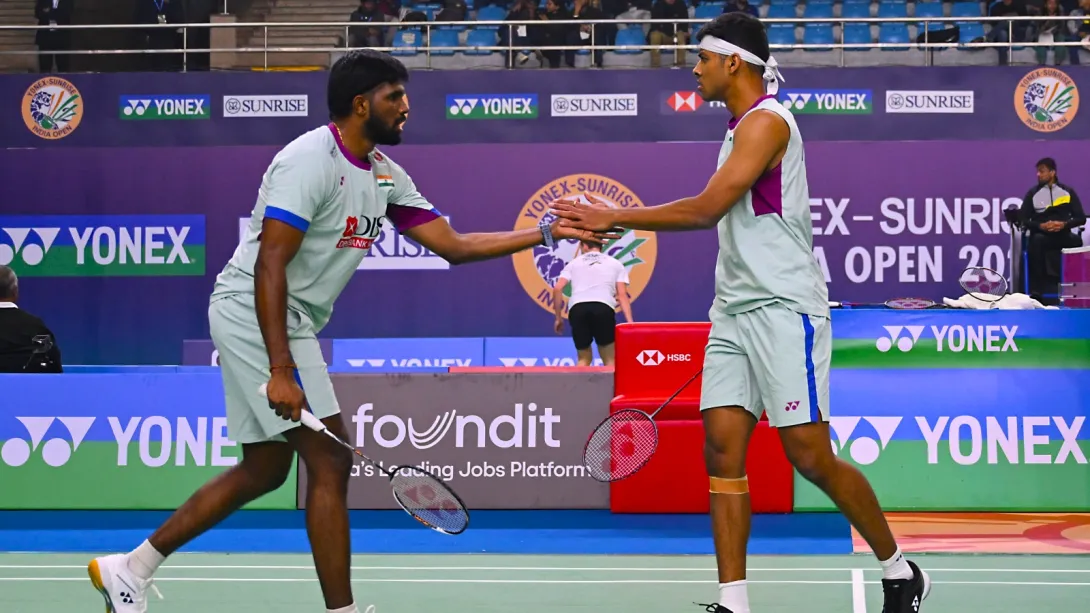
India’s leading badminton players have voiced deep disappointment over the lack of public recognition following their achievements at the Thomas Cup. Despite securing historic success, including a bronze medal and a previous gold, players such as HS Prannoy, Chirag Shetty, and Satwiksairaj Rankireddy have expressed frustration over the muted response back home. Their remarks reflect a broader concern about India’s sporting culture, where achievements outside cricket often struggle to command widespread attention, financial backing, and emotional investment from the public.
A Cry for Recognition in a Cricket-Dominated Landscape
India’s badminton elite have rarely spoken with such candor. The recent remarks by HS Prannoy cut to the heart of the issue: the global stature of the Thomas Cup remains underappreciated domestically. Often likened to the World Cup of badminton, the tournament represents the pinnacle of team achievement in the sport. Yet, its significance appears diluted in the Indian public imagination.
This disconnect, Prannoy suggests, reflects a structural imbalance in how sports are consumed and celebrated in India. Cricket continues to monopolize attention, leaving even world-class accomplishments in other disciplines fighting for visibility.
Beyond Applause: The Economics of Recognition
For Chirag Shetty, the issue is not about ceremonial fanfare or grand receptions. Instead, it is about acknowledgment—an intangible yet critical currency that drives morale, sponsorship, and long-term investment in sport.
In economic terms, recognition translates into brand equity. Athletes who command public admiration are more likely to attract endorsements, secure funding, and sustain their careers. The absence of such appreciation creates a cycle where even high-performing athletes remain under-leveraged assets in India’s sports economy.
Shetty’s remarks underscore a pragmatic expectation: not extravagance, but respect proportionate to achievement.
Emotional Toll and a Stark Personal Resolve
The most poignant reaction came from Satwiksairaj Rankireddy, whose disappointment has taken a deeply personal turn. His declaration that he would discourage his future children from pursuing badminton speaks volumes about the emotional toll of perceived neglect.
Such statements are not merely rhetorical; they signal a potential erosion of the talent pipeline. When elite athletes themselves question the value of their sport within the national framework, it raises concerns about sustainability and generational continuity.
Institutional Support Versus Public Sentiment
The interaction, facilitated by the Sports Authority of India, highlights a paradox. While institutional mechanisms have improved—offering training, funding, and international exposure—the gap between official support and public sentiment remains stark.
This divergence suggests that policy interventions alone cannot reshape a sporting culture. Public engagement, media narratives, and grassroots awareness must align to create a holistic ecosystem where achievements are both recognized and celebrated.
A Defining Moment for India’s Sporting Identity
The frustration voiced by India’s badminton stars is not merely a reaction to one tournament’s aftermath. It reflects a deeper introspection about the country’s sporting priorities and identity.
As India aspires to emerge as a global sporting powerhouse, the challenge lies in broadening its cultural and economic investment beyond cricket. Recognizing achievements in events like the Thomas Cup is not just about fairness—it is about redefining national ambition.
Until then, the voices of players like HS Prannoy, Chirag Shetty, and Satwiksairaj Rankireddy will continue to echo as both a critique and a call to action.
Comments