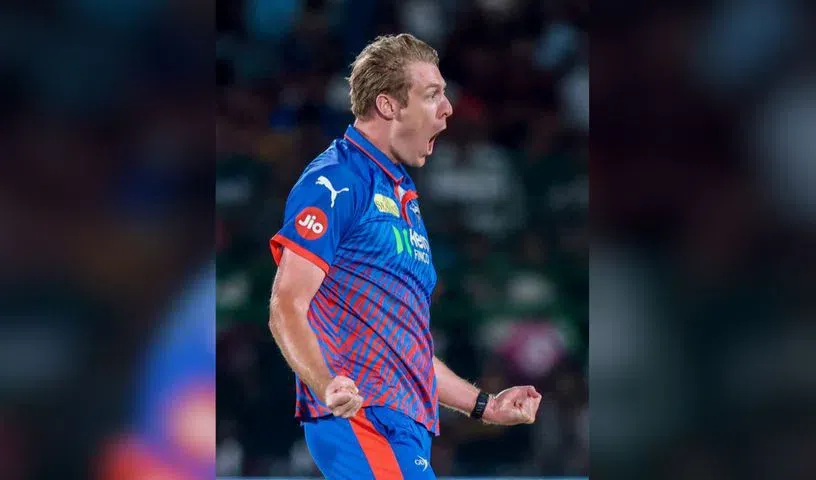
Disciplinary enforcement in the Indian Premier League came into focus after Kyle Jamieson of Delhi Capitals received a demerit point and formal warning for breaching the league’s code of conduct. The incident occurred during a match against Rajasthan Royals following an aggressive on-field exchange after the dismissal of Vaibhav Sooryavanshi. The episode underscores the IPL’s commitment to maintaining professional standards, reinforcing governance frameworks that protect the league’s commercial integrity and global reputation amid increasing financial stakes and audience engagement.
Incident Triggers Disciplinary Review
The Indian Premier League’s regulatory framework was activated after Kyle Jamieson was found to have violated the tournament’s code of conduct during a high-intensity fixture. The breach followed an animated on-field interaction after he dismissed Rajasthan Royals batter Vaibhav Sooryavanshi.
Match officials reviewed the incident and imposed a demerit point alongside a formal warning, signaling a measured yet firm response. While the altercation did not escalate into a major confrontation, the league’s swift action reflects its zero-tolerance stance toward unsportsmanlike behavior.
Code of Conduct and Governance Standards
The IPL operates under a comprehensive code of conduct designed to ensure discipline, respect, and professionalism. Even minor breaches are scrutinized, given the league’s global visibility and commercial value.
Demerit points serve as a regulatory mechanism, creating a cumulative record of player conduct. Repeated violations can lead to escalated sanctions, including fines or suspensions. This structured approach reinforces accountability while maintaining consistency in disciplinary decisions.
Commercial Stakes and Brand Integrity
Incidents of on-field misconduct carry implications beyond the boundary rope. The IPL is one of the most lucrative sports leagues globally, attracting substantial investments from sponsors, broadcasters, and franchise owners.
Maintaining discipline is therefore critical to preserving brand equity. Aggressive behavior, if unchecked, can undermine the league’s reputation and affect stakeholder confidence. By enforcing rules consistently, the IPL safeguards its image as a professionally managed sporting property.
Player Conduct in a High-Pressure Environment
Cricket at the elite level is inherently competitive, with players operating under intense pressure. Emotional reactions are not uncommon, particularly in pivotal match situations. However, the expectation remains that players adhere to established behavioral standards.
For athletes like Jamieson, such incidents serve as reminders of the fine line between competitive intensity and professional decorum. The league’s disciplinary framework aims to strike a balance—allowing passion while curbing excess.
Broader Implications for the League
The episode highlights the IPL’s evolving governance model, where transparency and accountability are central to operations. As the league continues to expand its global footprint, maintaining strict oversight of player conduct becomes increasingly important.
From a business perspective, consistent enforcement of rules enhances credibility among international audiences and commercial partners. It also sets benchmarks for emerging leagues seeking to replicate the IPL’s success.
Conclusion: Discipline as a Cornerstone of Growth
The sanction imposed on Kyle Jamieson underscores a fundamental principle: discipline is integral to sustainable growth in professional sports. While the incident itself may appear minor, the response reflects a broader commitment to upholding standards.
As the IPL continues to operate at the intersection of sport and commerce, such measures ensure that competitive intensity does not compromise the league’s integrity, reinforcing its position as a global leader in sports governance and entertainment.
Comments