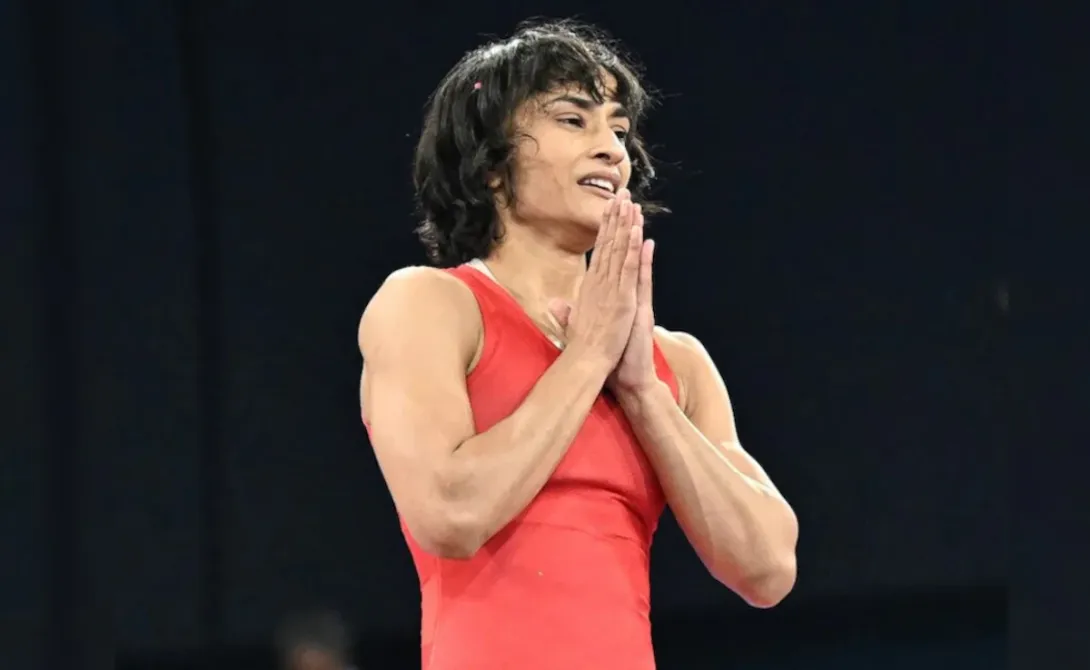
Wrestling Federation of India has introduced revised eligibility criteria for the upcoming Asian Games wrestling selection trials, significantly impacting the prospects of veteran wrestler Vinesh Phogat. Under the new framework, only medal winners from competitions held in 2025 and 2026 will be eligible to participate in the trials, effectively excluding Phogat, who has not returned to professional competition since her disqualification at the 2024 Summer Olympics. The development has triggered widespread debate within Indian wrestling circles, raising broader questions about athlete reintegration, administrative transparency, and the balance between meritocracy and legacy in elite sports governance.
WFI’s New Eligibility Framework Reshapes Asian Games Selection Landscape
The Wrestling Federation of India has introduced a stricter qualification structure for the upcoming Asian Games selection trials, dramatically altering the competitive pathway for several athletes, including one of India’s most prominent wrestlers, Vinesh Phogat.
According to the revised policy, only wrestlers who secured medals in officially recognized competitions during 2025 and 2026 will be eligible to participate in the final selection trials for the Continental event.
The decision has effectively ended Phogat’s immediate hopes of competing at the Asian Games, as she has not participated in professional wrestling since her emotional disqualification at the Paris Olympics in 2024.
The women’s wrestling trials are scheduled to take place on May 30 at the Indira Gandhi Indoor Stadium, while the men’s freestyle and Greco-Roman trials will be conducted a day later at Sports Authority of India Regional Centre in Lucknow.
The move marks one of the most consequential administrative decisions in Indian wrestling ahead of the next major multi-sport cycle.
Vinesh Phogat’s Competitive Future Faces Fresh Uncertainty
The revised criteria have placed renewed focus on the uncertain sporting future of Vinesh Phogat.
Once regarded as one of India’s most accomplished female wrestlers, Phogat has remained absent from competitive wrestling following the dramatic conclusion to her Olympic campaign in Paris. Her disqualification at the Games became one of the most emotionally charged moments in Indian sport, drawing national attention and sparking widespread public debate.
Since then, Phogat has largely remained away from active competition while simultaneously expanding her political role as a Congress MLA in Haryana.
The latest WFI decision now raises serious doubts regarding whether she will be able to return to elite international wrestling under the current qualification structure.
For many observers, the development represents not only a sporting setback but also a symbolic moment in the transition between generations within Indian wrestling.
Wrestling Governance Continues to Face Scrutiny
The controversy surrounding the new eligibility framework arrives at a sensitive time for Indian wrestling administration.
Over the past several years, Indian wrestling has experienced repeated governance disputes, athlete protests, legal battles, and institutional restructuring. Administrative decisions involving selection criteria and athlete eligibility have therefore become highly scrutinized both within the sporting community and among the wider public.
Critics argue that rigid qualification systems risk excluding experienced athletes capable of delivering results on major international stages. Supporters of the policy, however, maintain that objective and performance-based criteria are essential to maintaining competitive integrity and ensuring fairness in team selection.
Sports governance experts frequently emphasize that transparent qualification mechanisms are critical for maintaining credibility within national federations, particularly in high-pressure Olympic disciplines.
The WFI’s latest move appears aimed at reinforcing merit-based selection standards ahead of the Asian Games cycle.
Meritocracy Versus Legacy Debate Intensifies
The exclusion of an athlete with Phogat’s profile has reignited a familiar debate in elite sport: should past achievements influence future selection opportunities?
Supporters of Phogat argue that athletes with proven international pedigree deserve pathways back into competition, especially after long periods shaped by injury, controversy, or personal setbacks. They believe experience and past success remain valuable assets in major tournaments where psychological resilience often proves decisive.
Others argue that selection policies must prioritize recent form and active competition exposure rather than historical reputation.
The WFI’s revised criteria clearly signal a shift toward performance recency as the primary benchmark for eligibility. Analysts note that such systems are increasingly common in global sports administration, where federations seek to avoid ambiguity and reduce allegations of favoritism.
However, the emotional and symbolic weight surrounding Phogat’s absence ensures the decision will remain politically and publicly sensitive.
Indian Wrestling Navigates a Generational Transition
The broader significance of the controversy lies in Indian wrestling’s ongoing generational transition.
Over the last decade, wrestlers like Vinesh Phogat played a major role in elevating the visibility of women’s wrestling in India. Their international success helped attract institutional investment, corporate sponsorship, and wider public recognition for the sport.
Now, Indian wrestling appears to be entering a new competitive phase where younger athletes are increasingly competing for leadership positions within the national structure.
Federations often face difficult choices during such transitions, particularly when balancing respect for established champions against the need to promote emerging talent and maintain performance standards.
The current selection framework suggests WFI is prioritizing active competitive participation as the central measure of readiness for international competition.
Political and Sporting Identities Add Complexity
Phogat’s evolving public identity also adds another dimension to the situation.
As a Congress MLA in Haryana, she now occupies both sporting and political spaces simultaneously — a combination that inevitably intensifies public attention surrounding administrative decisions affecting her career.
In India, elite athletes transitioning into politics frequently continue to retain symbolic influence within their respective sports. As a result, sporting controversies involving politically active athletes often acquire broader public and media significance beyond competition alone.
Analysts believe the WFI’s decision is therefore likely to generate continued debate not only within wrestling circles but also within political discourse.
Asian Games Preparation Enters Crucial Phase
With the selection trials now approaching, Indian wrestling enters a critical preparation period ahead of the Asian Games.
The federation’s emphasis on recent medal-winning performances reflects a broader strategic attempt to field athletes considered match-ready and competitively active at the highest level.
Whether the policy ultimately strengthens India’s medal prospects remains to be seen. However, the exclusion of a high-profile athlete like Vinesh Phogat has already ensured that the selection process will remain under intense public scrutiny.
For Indian wrestling, the coming weeks may prove defining — not only in terms of team composition, but also in shaping perceptions around fairness, governance, and the future direction of one of the country’s most successful Olympic sports.
Comments