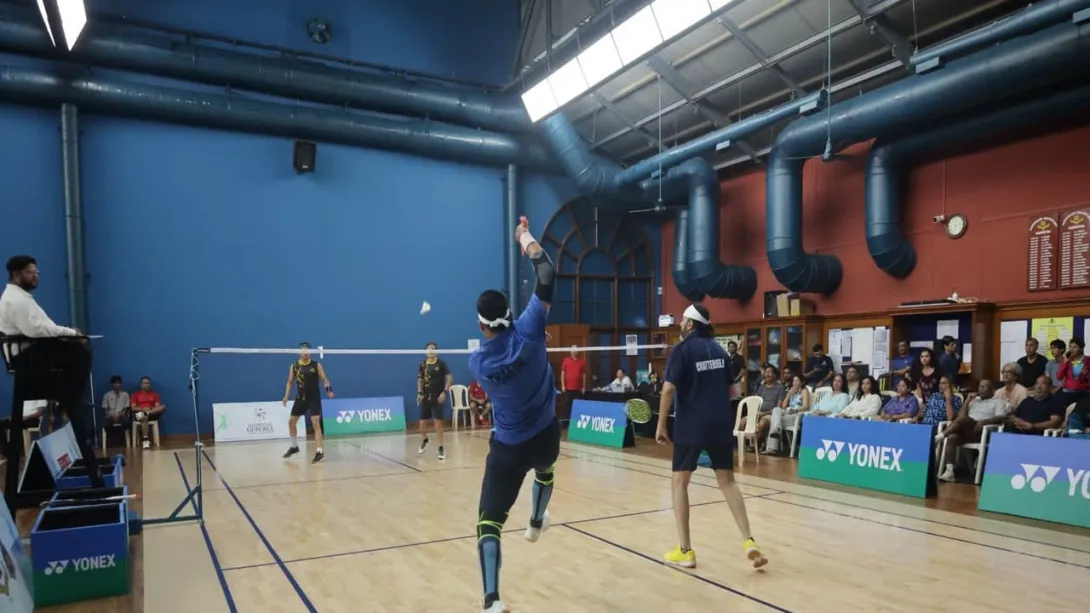
The semi-finals of the GD Birla Memorial Masters Inter-Club Badminton Tournament delivered a dramatic shake-up as top-seeded players were eliminated in the women’s 45+ category at Bombay Gymkhana. Priya Ambekar and Namita Mehta-Vijayakar, the top two seeds, exited the tournament following unexpected defeats. While Ambekar suffered a straight-games loss to Pooja Jhalani, Namita pushed her opponent to three games before falling short. The results underscore the growing competitiveness in veteran badminton circuits and highlight the unpredictability shaping tournament outcomes.
A Day of Upsets in Mumbai
The semi-final stage of the GD Birla Memorial Masters Inter-Club Badminton Tournament unfolded with unexpected intensity, as several seeded contenders were eliminated in decisive fashion. Hosted at the Bombay Gymkhana, the event witnessed a shift in competitive dynamics, particularly in the women’s 45+ category.
Such outcomes reflect the evolving nature of veteran badminton, where experience alone is no longer a guarantee of dominance.
Top Seeds Exit in Contrasting Styles
Top seed Priya Ambekar endured a difficult outing, losing in straight games to Pooja Jhalani with a scoreline of 6-21, 13-21. The one-sided nature of the match highlighted Jhalani’s tactical superiority and execution under pressure.
In contrast, second seed Namita Mehta-Vijayakar delivered a more resilient performance. After dropping the first game, she staged a comeback to level the match before eventually losing 14-21, 21-15, 11-21. The contest showcased her competitive spirit but also exposed the fine margins that separate victory from defeat at this level.
Competitive Depth in Veteran Circuits
The elimination of the top two seeds underscores a broader trend within veteran badminton: increasing depth and parity among players. As more participants maintain high levels of fitness and technical proficiency, the gap between seeded and unseeded players continues to narrow.
This shift enhances the overall quality of competition, making tournaments less predictable and more engaging for both participants and spectators.
Strategic and Performance Insights
From a performance standpoint, the results highlight the importance of adaptability and match-specific strategy. Pooja Jhalani’s decisive victory over Ambekar suggests a well-executed game plan, while Namita’s three-game battle illustrates the physical and mental demands of high-level competition.
Such matches reinforce the need for continuous preparation, even among experienced players, as the competitive landscape evolves.
Broader Implications for the Sport
While veteran tournaments may not command the same commercial scale as elite international events, they play a crucial role in sustaining grassroots engagement and promoting lifelong participation in sport.
Events like the GD Birla Memorial Masters contribute to the broader badminton ecosystem by fostering community involvement, encouraging competitive spirit, and maintaining the sport’s visibility across age groups.
Unpredictability as the New Normal
The semi-final results serve as a reminder that in modern sport, unpredictability is increasingly the norm. The fall of top seeds not only reshapes tournament narratives but also creates opportunities for emerging contenders to make their mark.
As the competition progresses, the spotlight will remain on those who can adapt, execute, and capitalize on shifting momentum—qualities that now define success in contemporary badminton.
Comments