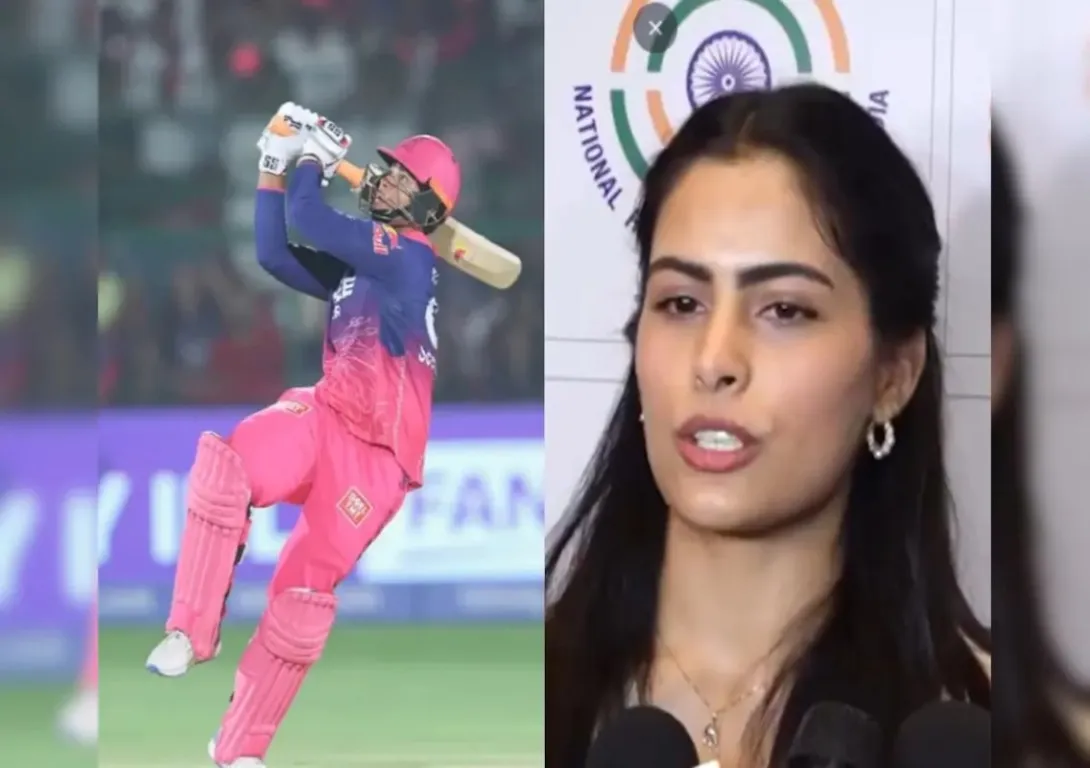
A routine media question posed to Olympic shooter Manu Bhaker regarding teenage cricket prodigy Vaibhav Sooryavanshi has unexpectedly ignited a broader public debate on social media about the hierarchy of sports recognition in India. The exchange occurred during the 75th anniversary celebrations of the National Rifle Association of India. While Bhaker responded in a balanced and encouraging manner, the framing of the question itself drew criticism online, with many users arguing that it reflected a systemic bias toward cricket over other sports. The incident has reopened discussions about media narratives, athlete visibility, and sporting equity in India.
A Question That Sparked a Larger Conversation
At the commemorative event marking the 75th anniversary of the National Rifle Association of India, Olympic medalist Manu Bhaker was asked to comment on the rapid rise of young cricket talent Vaibhav Suryavanshi.
While the question was framed as a casual reference to emerging sporting talent, its underlying context quickly became the focal point of public discourse. Bhaker’s response was measured and supportive, but the moment itself resonated far beyond the venue.
Social Media Reaction and Public Sensitivity
The exchange triggered a strong reaction across digital platforms, where users debated whether such comparisons between athletes from fundamentally different sports contexts were appropriate.
Many commentators argued that the question reflected a recurring tendency in Indian media to prioritize cricket narratives over achievements in Olympic and non-cricket disciplines. Others viewed it as an opportunity to highlight rising talent across sports, though the framing of the question remained the central point of contention.
The Structural Bias in Sporting Visibility
The incident has once again brought attention to the structural imbalance in sporting visibility in India. Cricket, supported by a vast commercial ecosystem and extensive media coverage, often dominates public discourse, while Olympic sports struggle for comparable attention.
Athletes like Manu Bhaker, despite achieving international recognition, frequently operate within a narrower visibility framework compared to their cricketing counterparts.
This disparity extends beyond media coverage into sponsorship allocation, audience engagement, and long-term athlete branding opportunities.
Rising Talent and Comparative Narratives
The mention of Vaibhav Suryavanshi—a teenage cricket sensation—underscored the growing fascination with emerging stars in India’s most commercially dominant sport.
However, the juxtaposition of athletes from entirely different disciplines has raised questions about whether such comparisons are meaningful or inadvertently reinforce existing imbalances in sports journalism.
Experts argue that while cross-sport recognition is positive, it must be contextualized within the distinct developmental ecosystems of each discipline.
Media Framing and Athlete Representation
The controversy has also reignited discussion around media framing and its influence on public perception of sport. The way questions are posed in press interactions often shapes broader narratives about athlete value and relevance.
In this case, the framing was perceived by some as reinforcing cricket-centric discourse, even within a platform dedicated to celebrating achievements in shooting sports.
Conclusion
The exchange involving Manu Bhaker and references to Vaibhav Suryavanshi at an event hosted by the National Rifle Association of India has evolved into a broader commentary on how sporting narratives are constructed in India.
Beyond the immediate moment, the incident highlights a deeper structural issue: the unequal visibility afforded to different sports. As India continues to produce world-class athletes across disciplines, the challenge lies not only in nurturing talent but also in ensuring equitable recognition across the sporting spectrum.
Comments