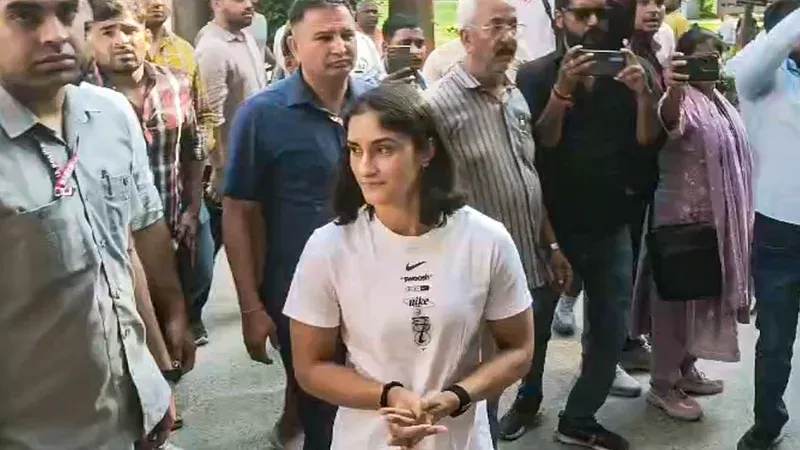
Indian wrestler Vinesh Phogat has pushed back against restrictions imposed by the Wrestling Federation of India, asserting that she has been officially cleared to return to competition by both the International Testing Agency and the World Anti-Doping Agency. The dispute centers on her eligibility status following retirement-related provisions under global anti-doping regulations. While the WFI has cited Rule 5.6.1 of WADA’s code concerning athletes returning from retirement, Phogat maintains that she is fully eligible to compete from January 1, 2026. The controversy highlights growing tensions between national sporting federations and international regulatory frameworks governing athlete participation in elite competition.
Vinesh Phogat Asserts Eligibility to Return to Competition
Indian wrestling star Vinesh Phogat has publicly challenged the decision of the Wrestling Federation of India, which has barred her from competing in upcoming events under provisions linked to anti-doping compliance rules.
Phogat has maintained that her status has been formally validated by international regulatory authorities, allowing her to resume competitive participation from January 1, 2026. Her statement comes amid escalating uncertainty surrounding her sporting future and eligibility in domestic and international wrestling circuits.
The issue has now evolved into a broader regulatory dispute involving overlapping interpretations of anti-doping governance and athlete reinstatement protocols.
WFI Cites Anti-Doping Rule on Athlete Reinstatement
The Wrestling Federation of India has justified its decision by referencing Rule 5.6.1 of the World Anti-Doping Agency code, which governs athletes who return to competition after retirement.
Under this framework, athletes who exit the registered testing pool and later attempt to re-enter professional competition are required to comply with specific notification periods and regulatory procedures before being deemed eligible.
The federation’s interpretation of these guidelines has led it to classify Phogat as currently ineligible to compete, despite her assertion of clearance from international bodies.
The conflicting positions have created a regulatory deadlock, placing Phogat’s competitive future in a state of uncertainty.
International Clearance Adds Complexity to the Dispute
At the center of Phogat’s argument is her claim that both the International Testing Agency and the World Anti-Doping Agency have cleared her to resume competition.
The International Testing Agency is responsible for implementing independent anti-doping programs across multiple sports, ensuring compliance with global standards. Its clearance, alongside WADA’s regulatory oversight, typically plays a decisive role in determining athlete eligibility at the international level.
Phogat’s position suggests that her compliance with these bodies should override domestic restrictions imposed by national federations. However, sports governance structures often involve layered authority, where national federations retain jurisdiction over participation in domestic and selection-based competitions.
This structural overlap lies at the heart of the current dispute.
Governance Tensions in Modern Sport Regulation
The controversy surrounding Phogat highlights a broader governance challenge within elite sport: the interaction between global regulatory bodies and national federations.
While organizations such as WADA and the International Testing Agency establish universal compliance standards, national federations retain operational control over athlete participation within their respective jurisdictions. This dual structure can occasionally lead to interpretational conflicts, particularly in cases involving athlete reinstatement after retirement or suspension.
Experts note that such disputes are not uncommon in international sport, especially in disciplines with stringent anti-doping frameworks. However, they often raise questions about procedural clarity, administrative consistency, and athlete rights within overlapping regulatory systems.
Impact on Indian Wrestling Ecosystem
The dispute also carries broader implications for the Indian wrestling ecosystem, where governance challenges have periodically drawn attention in recent years.
Vinesh Phogat remains one of India’s most prominent wrestling figures, and any uncertainty surrounding her eligibility has significant competitive and symbolic consequences.
For the Wrestling Federation of India, the case underscores the complexity of aligning domestic regulatory interpretations with international anti-doping frameworks while maintaining transparency and athlete trust.
The outcome of the dispute could influence how future cases involving athlete retirement, reinstatement, and eligibility are handled within Indian sport administration.
A Broader Question of Athlete Rights and Regulatory Clarity
Beyond the immediate dispute, the situation raises important questions about athlete autonomy and regulatory clarity in modern sport.
As international sporting governance becomes increasingly complex, athletes often find themselves navigating multiple layers of compliance requirements. Clear communication between global and national bodies is therefore essential to avoid ambiguity and ensure fair participation pathways.
Phogat’s case illustrates how gaps in interpretation can escalate into institutional disputes, particularly when high-profile athletes are involved.
Looking Ahead
As the disagreement between Vinesh Phogat and the Wrestling Federation of India continues, attention is likely to shift toward formal clarification from governing authorities.
A resolution will require alignment between national regulatory interpretation and international compliance certification to ensure procedural consistency.
For now, the case remains emblematic of a larger structural challenge in global sport: balancing the authority of international regulatory frameworks with the jurisdiction of national sporting bodies, while safeguarding the rights and careers of athletes at the center of such disputes.
Comments