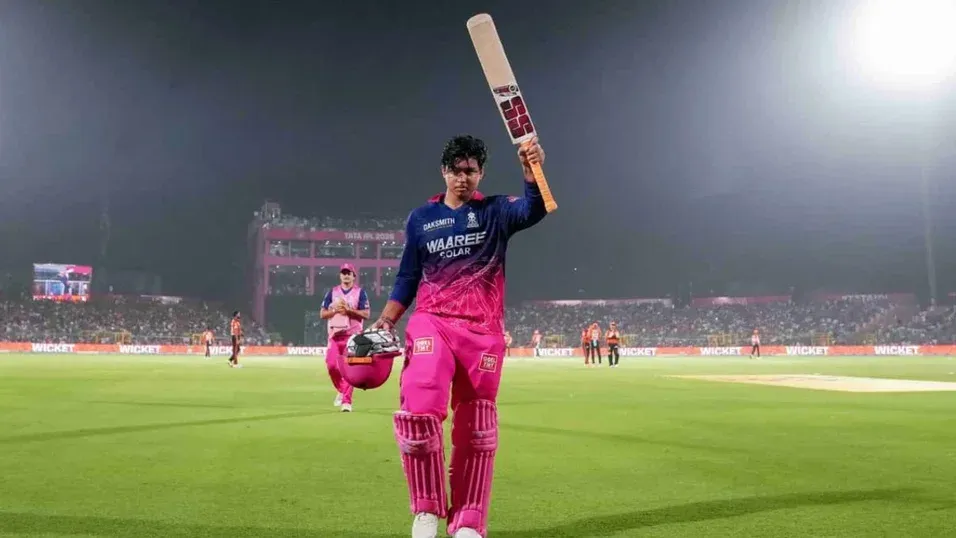
Vaibhav Sooryavanshi has emerged as one of the most talked-about young talents in the Indian Premier League 2026, earning widespread admiration from former cricketers for his fearless batting approach. Representing Rajasthan Royals, the teenage batter has played a pivotal role in setting up strong starts for his team, despite being one of the youngest players in the competition. While his rapid rise has been widely celebrated, a former India captain has offered a more cautious and stringent assessment, highlighting the need for long-term development alongside early success in professional cricket.
A Teenage Prodigy Reshaping Expectations
Vaibhav Sooryavanshi’s emergence in IPL 2026 has disrupted conventional expectations around age and performance in elite cricket. Debuting at just 14, he has quickly transitioned from a promising prospect to a central figure in Rajasthan Royals’ batting structure.
His ability to consistently challenge experienced bowlers has positioned him as a rare talent in franchise cricket. In a league defined by high-pressure situations and seasoned international performers, Sooryavanshi’s composure has stood out as both unconventional and impactful.
Rajasthan Royals’ Batting Core Finds a New Anchor
The Rajasthan Royals have enjoyed a strong batting season, with Sooryavanshi playing a foundational role in setting up competitive totals. His contributions at the top of the order have provided stability and momentum, often dictating the tone of the innings.
Despite his age, his shot selection and adaptability against varied bowling attacks have allowed him to compete effectively against marquee international players. This early success has made him one of the most closely watched emerging batters in the league.
Divided Expert Opinion on Early Stardom
While several former cricketers have praised Sooryavanshi’s talent and temperament, not all assessments have been uniformly celebratory. A former Indian captain has offered a more restrained viewpoint, emphasizing the importance of managing expectations around such a young athlete.
The concern is not about ability, but sustainability. In high-performance sport, early breakthroughs often require careful handling to ensure long-term consistency and psychological resilience. This perspective reflects a broader understanding of athlete development in elite environments.
The Economics of Emerging Talent in the IPL
From a structural standpoint, players like Sooryavanshi represent significant long-term value for franchises. Young domestic talent, if nurtured effectively, can deliver high returns in terms of performance impact relative to cost.
In a league where team composition is closely tied to auction strategy and salary caps, identifying early-stage performers offers both competitive and financial advantages. Sooryavanshi’s rise therefore carries implications beyond on-field success, influencing future squad-building approaches.
Balancing Opportunity with Development
The central challenge for Rajasthan Royals will be balancing immediate utilization with long-term player development. Overexposure at a young age can sometimes hinder progression, while underutilization risks stalling momentum.
Effective management will require a calibrated approach—ensuring that Sooryavanshi continues to gain experience without being burdened by excessive expectations. Coaching support and workload management will be critical in this phase of his career.
A Future-Defining Talent in the Making
Vaibhav Sooryavanshi’s journey in IPL 2026 represents both opportunity and responsibility for Indian cricket. His early performances suggest the emergence of a potentially transformative player, while expert caution highlights the importance of structured development.
As the season progresses, his evolution will be closely monitored not only by fans and analysts but also by franchise strategists who recognize his potential as a long-term asset. In a league defined by instant impact, Sooryavanshi’s story is shaping into one of the most compelling narratives of the season.
Comments